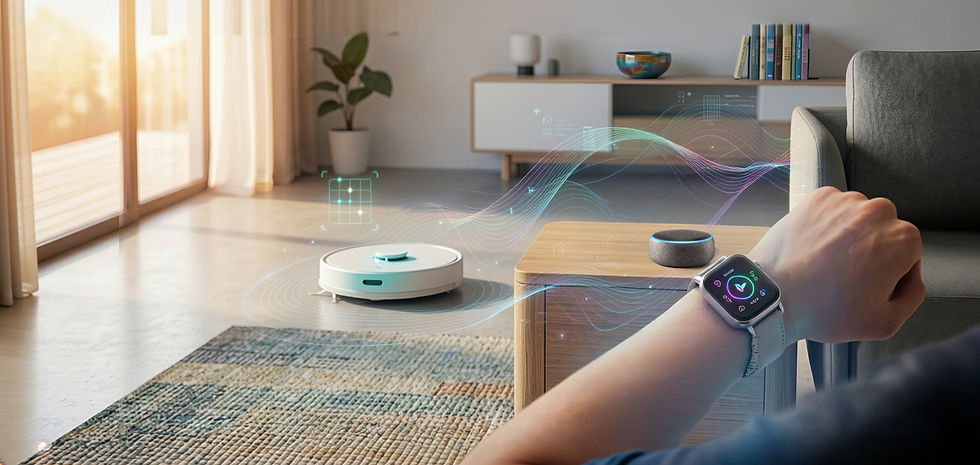
What makes a smart product feel smart?
PhD research on how people perceive smartness in everyday IoT artifacts, and what that means for designing them.
("here, 'artifact' just means the connected, everyday product itself")
BRAND
Istanbul Technical University
ROLE
UX Researcher
DEFENDED
2025
THE QUESTION
Smart artifacts are turning our homes into a mix of physical and digital spaces, but how people actually decide something feels "smart" has been overlooked. Earlier research measured specs and ease of use; not how it actually feels to live with these artifacts.
My research asked how what people feel and think shapes whether a connected artifact seems "smart" to them.
Smartness isn't what an artifact does. It's what a user feels.”

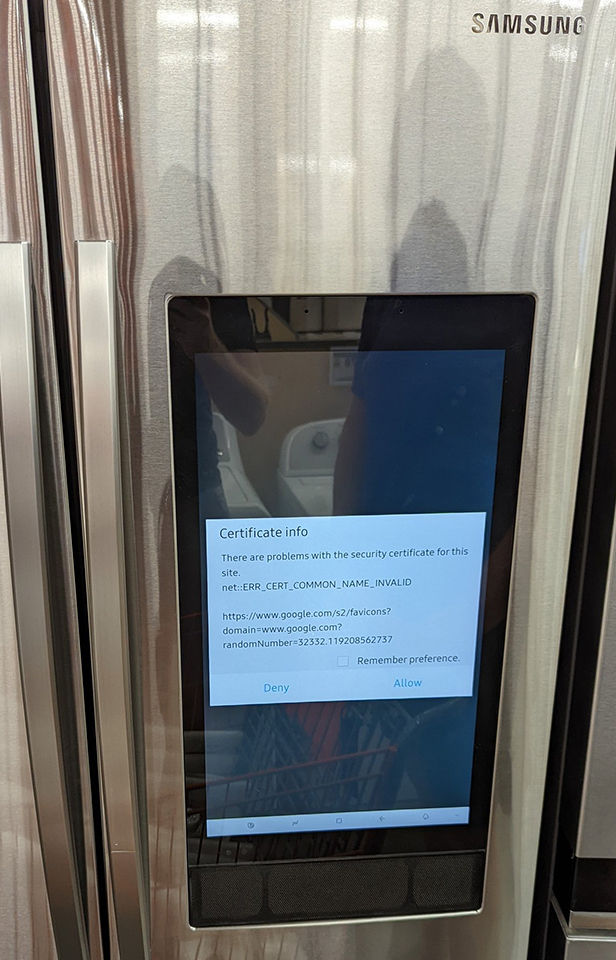

RESEARCH QUESTION 1
How do what people feel and think shape whether an artifact seems smart?
RESEARCH QUESTION 2
How do the ways we interact with an artifact (e.g. touch, voice, screen) shape whether it feels smart?
RESEARCH QUESTION 3
How do people make sense of smart artifacts; what they mean, and why they feel smart?"
WHAT I STUDIED

Autonomous . mobile . physical
ROBOT VACUUM CLEANER
It moves through the home and does physical work on its own; raising questions about independence, awareness of its surroundings, and how much people trust it when something goes wrong.

Wearable . body-adjacent
SMARTWATCH
Worn all day, it blurs the line between the person and the artifact; tied up with identity, feeling enhanced, and staying constantly connected.


Voice controlled . ambient
SMART SPEAKER
A new way of interacting: through language skill, giving it a personality, and having an AI presence in the home.

HOW I STUDIED?
A three-stage study: A small pilot to sharpen the method, an analysis of real e-commerce reviews to see how people describe ‘smart’ artifacts unprompted, then a week living with all three artifacts with ten participants; diaries, interviews, and a mapping session.


WHAT I FOUND?
The research surfaced seven recurring patterns in how people decide an artifact "feels smart", grouped into two categories: how it makes them feel, and how easy it is to think with.
EMOTIONAL UX
The feelings and bonds people form: satisfaction, trust, frustration, and treating the artifact like it's alive (participants gave artifacts names like "Mr. Kaplan," "Katya," and "The Tasmanian Devil").
KEY CONCEPTS . Emotional engagement, intriguing existence.


It’s like getting to know each other, after 3-4 times you talk to it like a human being.
Participant 06
It has become the product that I love and value most in my home. Why haven’t I taken it for years; truly a savior.
Participant 13
COGNITIVE UX
The mental effort of using and understanding it: how efficient it feels, how capable it seems, and trust that's built or broken in an instant (a disconnection instantly reads as "not smart").
KEY CONCEPTS . Gratifying experience, competency enhancement, connectivity, desirability, identity attributions.

If I am doing something wrong, it could give me suggestions: it can send it like app news, which is not a very difficult thing.
Participant 12
When I try to search for something in Turkish (song, etc.), we don’t get along very well.
Participant 04

COMPETENCY ENHANCEMENT
The need to intervene in errors.
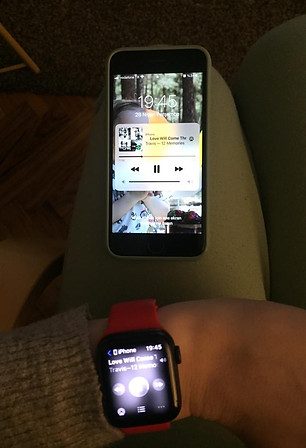
CONNECTIVITY
Smartwatches acting as smartphone extensions.

CONNECTIVITY
Disconnection implies being "not smart".
WHAT IT MEANS FOR DESIGN?
Feeling smart comes from the relationship and the experience, not from a spec sheet.
For design: Emotional engagement, human-like interaction, intriguing-existence, and habit-forming behavior all shape whether something feels smart; they're not just decoration.
An artifact that surprises you in a good way feels smarter than one that's technically superior but emotionally flat; and how it fails matters just as much as how it succeeds.

WHAT I LEARNED?
Feeling smart comes from the quality of the interaction, not a feature list; a finding I now apply directly when designing any connected product experience. A trustworthy, well-designed interaction matters more than adding more features.
PROCESS DEEP DIVE
The findings rest on a multi-phase study. The full method and thesis detail are here.
LITERATURE REVIEW
Before designing the study, I mapped how existing research defined "smart" and found the gap: nobody had looked at the lived, emotional, and mental experience of using these artifacts. That gap shaped the pilot study below.


PHASE 1. PILOT
Two participants pilot-tested every research tool: diaries, questionnaires, interview guides, and the biggest fix was swapping a printed diary for WhatsApp so people could log things in real time.

PHASE 2. ONLINE STUDY
Three rounds of coding real customer reviews from Trendyol, Hepsiburada, n11, and Amazon, to see how people describe smart artifacts when nobody's watching them talk.


PHASE 3.
MAIN STUDY
Ten participants, three smart artifacts, one week at home: diaries, questionnaires, interviews, and Miro think-aloud mapping.
FRAMEWORK DEFINITIONS
Each of these seven patterns came out of coding the main study, grouped under two broader categories of experience.
EMOTIONAL ASPECTS OF UX
-
Emotional Engagement . People describe, humanize, and name smart artifacts (e.g., "Mr. Kaplan," "Katya"), forming companion-like bonds that keep them using it even when it's frustrating.
-
Intriguing Existence . An artifact feels smart when it motivates people toward a goal (fitness, language learning) or surprises them with something unexpected and delightful.
COGNITIVE ASPECTS OF UX
-
Gratifying Experience . Feeling smart is relative: people judge an artifact against other brands, other models, or even what they could do themselves; and reward the ones that beat expectations.
-
Competency Enhancement . Artifacts that feel smart extend what a person can physically or mentally do, freeing up their time or attention.
-
Connectivity . Smartness is tied to how reliably an artifact connects a person to the internet, other devices, and other people; a disconnection badly damages that perception.
-
Desirability . How an artifact looks, and what owning it says about you (modern, tech-forward), shapes whether it feels smart and worth having.
-
Identity Attributions to the Artifact . How familiar, flexible, easy to understand, and trustworthy an artifact feels; including how novice-, age-, pet-, and child-friendly it is, determines whether it earns the label "smart."


